A reference, immediately
Your enquiry is recorded and given a reference on screen before you leave the page.
Not "what does it cost?" but "will this work here, and can I rely on getting it again?" KSP is an early-stage procurement business set up to answer the second one properly.
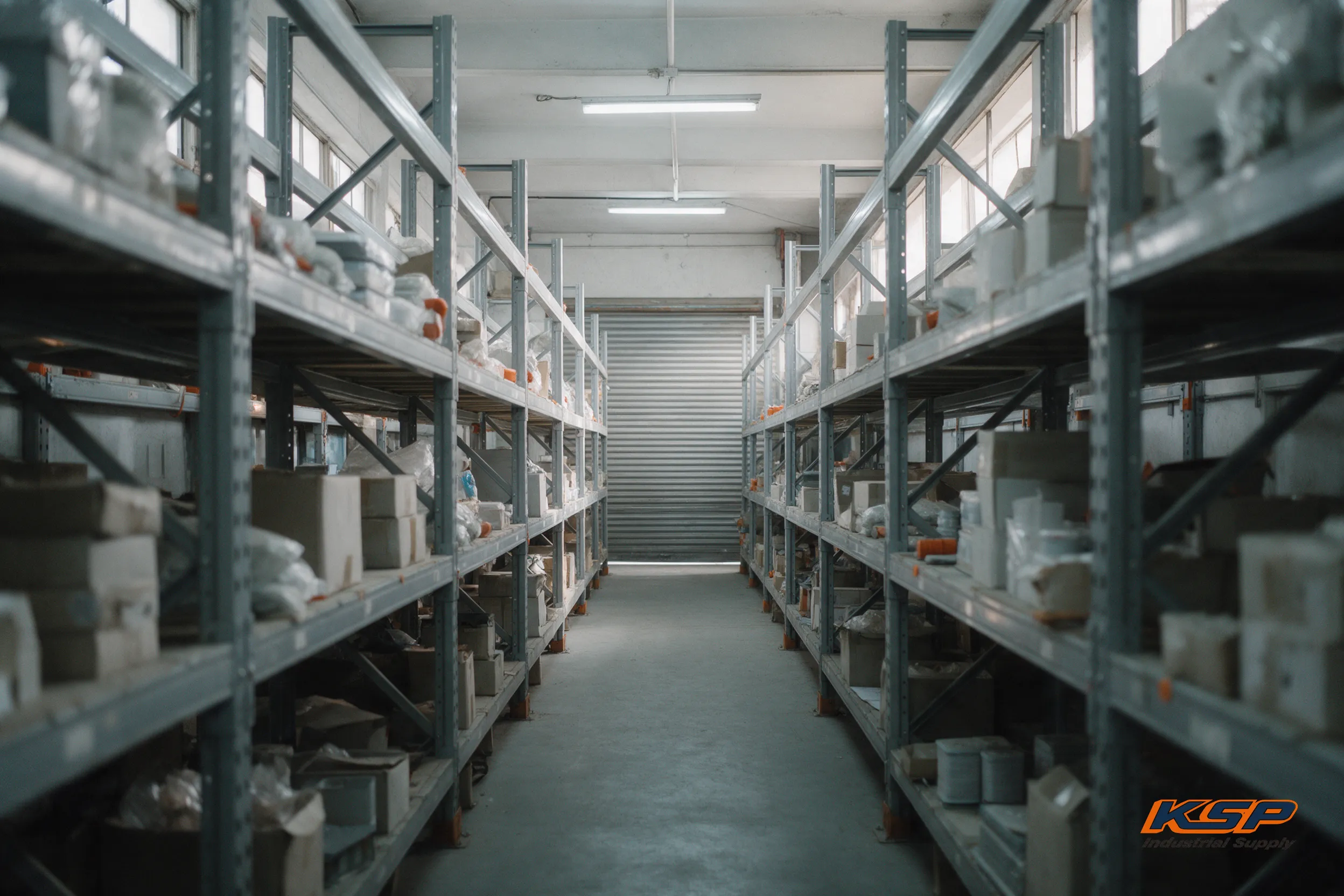
A production site orders safety and hygiene consumables constantly, and the ordering is rarely the hard part. The hard part is that a requirement gets passed along as a product name and a quantity, with the application left behind. A glove is substituted for a similar glove. A disinfectant arrives in the wrong concentration for the surface. A padlock does not fit the isolation point it was bought for.
KSP is built to hold on to the missing half of that conversation. Before a requirement goes out for sourcing, we want to know where the product is used, what it is used on, who uses it, and what specification your team has already approved.
That is a working method, not a technology claim. It is carried out by hand, and the discipline is the point: a requirement written down properly can be compared, reordered and questioned later. One built on assumptions cannot.
Seven stages, carried out by hand. Select one to see what happens in it.
Stage 1 of 7
A list, a specification, or a description of what the product has to do. You get a reference on screen straight away.
Nothing is interpreted at this stage. What you send is what we work from, and anything ambiguous is carried forward as an open question rather than quietly resolved.
Stage 2 of 7
Where the product is used, on what, by whom, and against which approved specification.
This is the step most enquiries skip. A glove specified only by size, or a disinfectant specified only by name, is not yet a requirement anyone can source correctly.
Stage 3 of 7
Sources are identified and checked against the requirement, not against price alone.
A source that cannot supply product information, or cannot meet the specification without a substitution, is not carried forward as an option.
Stage 4 of 7
Line items, pack sizes, quantities and terms set out so they can be compared with what you already pay.
Where a proposed item differs from the specification, the difference is stated on the quotation rather than left for you to discover on delivery.
Stage 5 of 7
You see what was confirmed and what was not. Any alternative is put to you rather than substituted.
If we could not confirm something, we say so. An unconfirmed availability is reported as unconfirmed, not rounded up into a promise.
Stage 6 of 7
Timing, location and handover are agreed for the specific order.
KSP has no delivery record to base a standard lead time on, so none is quoted. What is agreed for your order is what we hold ourselves to.
Stage 7 of 7
Product documentation you asked for, and the specification the order was placed against.
The requirement, the questions asked, and the answers given are kept together, so a repeat order starts from the last one rather than from nothing.
KSP Industrial Supply was founded by Karunakar S, a chemical engineer with a B.E. from SDMCET, Dharwad, and roughly four and a half years in FMCG manufacturing across production, process improvement, GMP practice, safety and team supervision.
That is manufacturing experience, not pharmaceutical experience, and we would rather draw the distinction ourselves than have you find it. What carries across is the shop-floor view: how a consumable is actually used on a line, why a substitution that looks equivalent on paper causes a problem in practice, and what a stores team needs in order to reorder without re-opening the whole question.
Every enquiry is handled by someone who has worked a production floor.
These are commitments, not aspirations. They hold from the first enquiry.
Your enquiry is recorded and given a reference on screen before you leave the page.
Where the application is unclear, we ask. A quotation built on an assumption is worth nothing to either of us.
Line items, pack sizes and terms set out so they can be read against what you already pay.
Product documentation is requested from the source and passed on. What cannot be obtained is reported as such.
Any proposed alternative is put to you with the difference named, rather than substituted and discovered on delivery.
One relationship and one escalation path across all seven areas.
The intent is a systems-led procurement business: consistent requirement records, a disciplined follow-up process, and enquiry history that informs later purchases instead of starting from nothing each time. Those systems come after the basics work by hand, not before.